


The global functional apparels industry has evolved from niche performance wear into a mainstream apparel category driven by technology, health awareness, and lifestyle transformation. Consumers increasingly demand garments that offer moisture management, temperature regulation, durability, and enhanced mobility. This shift is supported by the convergence of fashion and function, where aesthetics meet performance engineering. As urbanization, fitness culture, and outdoor recreation gain traction worldwide, functional clothing continues to penetrate both athletic and casual segments.
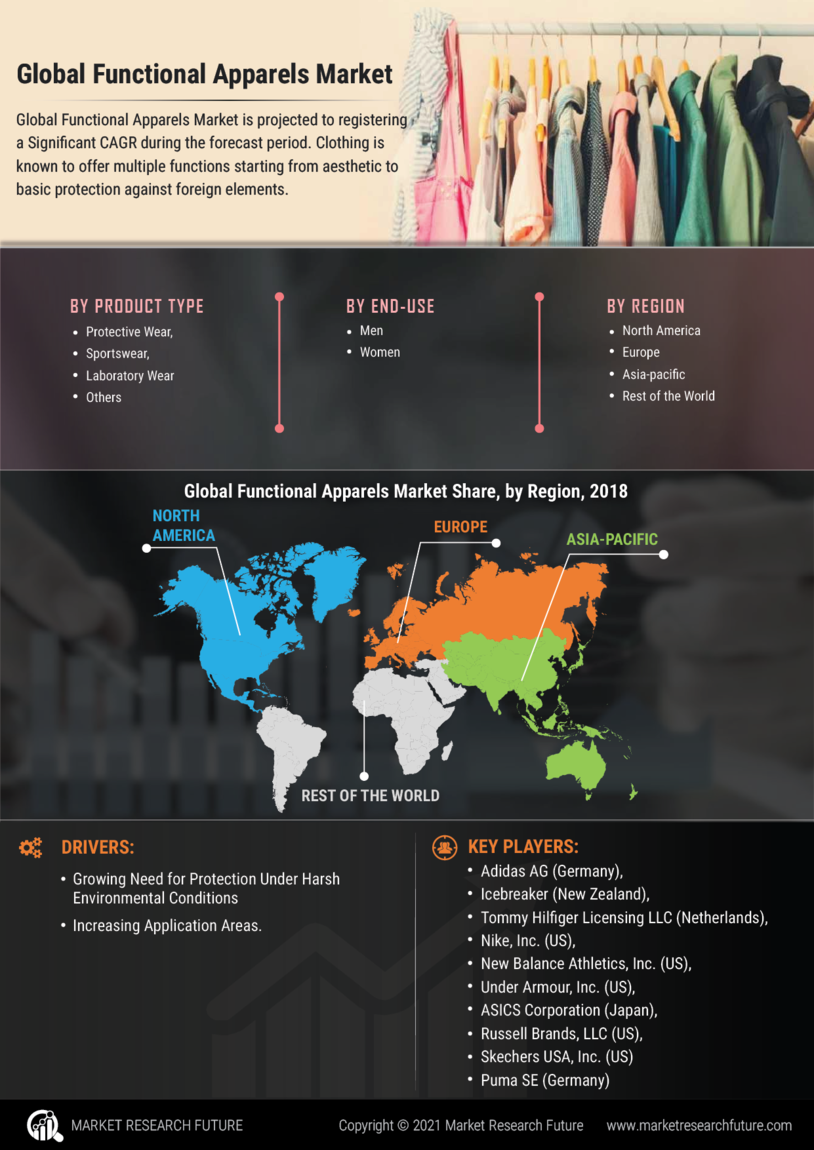
The Functional Apparels Market is projected to grow significantly, reaching USD 437,000.0 Billion in 2025 and expanding to USD 730,000.0 Billion by 2035, registering a CAGR of 5.4% during the forecast period (2025–2035). Market research coverage highlights revenue forecasts, competitive landscape mapping, growth factors, and evolving trends shaping industry expansion. Increasing consumer spending on premium sportswear and performance gear is strengthening market momentum across developed and emerging economies alike.
https://www.marketresearchfuture.com/reports/functional-apparels-market-7074
Growth drivers remain strongly linked to technological innovation in textiles. Smart fabrics embedded with sensors, antimicrobial treatments, and UV protection capabilities are redefining product value. Demand for sustainable materials such as recycled polyester, organic cotton, and biodegradable fibers is also accelerating. Governments and environmental agencies are encouraging eco-friendly manufacturing, pushing brands to adopt circular production models. Additionally, rising participation in sports, yoga, gym activities, and adventure tourism is fueling consistent product demand.
From a competitive standpoint, the industry is highly dynamic. Global leaders including Nike, Adidas, Under Armour, Lululemon, Puma, Columbia Sportswear, The North Face, Reebok, and New Balance are investing heavily in R&D and digital retail strategies. Product differentiation through ergonomic design, lightweight materials, and climate-adaptive features is central to brand positioning. Strategic collaborations with technology firms and fitness platforms are further enhancing product ecosystems and customer engagement.
Artificial intelligence is reshaping the sector through predictive demand analytics, intelligent inventory systems, and personalized product recommendations. AI also supports smart textile development by optimizing material performance testing and accelerating design simulations. Supply chains are becoming more responsive through AI-driven forecasting and automation.
Looking ahead, the market’s future will be defined by the fusion of wearable technology, sustainability, and direct-to-consumer digital channels. Brands that integrate performance innovation with environmental responsibility will secure long-term competitive advantage. Expansion into medical wearables, rehabilitation garments, and corporate wellness apparel also presents new revenue streams.
For deeper strategic insights, stakeholders increasingly rely on Functional Textile Market Intelligence to evaluate innovation pipelines, regional demand shifts, and competitive benchmarking across the value chain.
________________________________________
FAQs
Q: What is driving growth in the Functional Apparels Market?
A: Key drivers include rising fitness awareness, smart textile innovation, sustainability trends, and growing demand for performance-enhancing clothing.
Q: How is AI influencing functional apparel manufacturing?
A: AI improves product design, material testing, demand forecasting, and supply chain efficiency while enabling personalized consumer experiences.
Q: Which region is growing fastest in this market?
A: Asia-Pacific is the fastest-growing region due to expanding middle-class populations, sports participation, and manufacturing capabilities.
Q: What future opportunities exist in functional apparel?
A: Opportunities include wearable tech integration, medical performance garments, eco-friendly fabrics, and AI-enabled customization solutions.
The Functional Apparels Market is projected to grow significantly, reaching USD 437,000.0 Billion in 2025 and expanding to USD 730,000.0 Billion by 2035, registering a CAGR of 5.4% during the forecast period (2025–2035). Market research coverage highlights revenue forecasts, competitive landscape mapping, growth factors, and evolving trends shaping industry expansion. Increasing consumer spending on premium sportswear and performance gear is strengthening market momentum across developed and emerging economies alike.
https://www.marketresearchfuture.com/reports/functional-apparels-market-7074
Growth drivers remain strongly linked to technological innovation in textiles. Smart fabrics embedded with sensors, antimicrobial treatments, and UV protection capabilities are redefining product value. Demand for sustainable materials such as recycled polyester, organic cotton, and biodegradable fibers is also accelerating. Governments and environmental agencies are encouraging eco-friendly manufacturing, pushing brands to adopt circular production models. Additionally, rising participation in sports, yoga, gym activities, and adventure tourism is fueling consistent product demand.
From a competitive standpoint, the industry is highly dynamic. Global leaders including Nike, Adidas, Under Armour, Lululemon, Puma, Columbia Sportswear, The North Face, Reebok, and New Balance are investing heavily in R&D and digital retail strategies. Product differentiation through ergonomic design, lightweight materials, and climate-adaptive features is central to brand positioning. Strategic collaborations with technology firms and fitness platforms are further enhancing product ecosystems and customer engagement.
Artificial intelligence is reshaping the sector through predictive demand analytics, intelligent inventory systems, and personalized product recommendations. AI also supports smart textile development by optimizing material performance testing and accelerating design simulations. Supply chains are becoming more responsive through AI-driven forecasting and automation.
Looking ahead, the market’s future will be defined by the fusion of wearable technology, sustainability, and direct-to-consumer digital channels. Brands that integrate performance innovation with environmental responsibility will secure long-term competitive advantage. Expansion into medical wearables, rehabilitation garments, and corporate wellness apparel also presents new revenue streams.
For deeper strategic insights, stakeholders increasingly rely on Functional Textile Market Intelligence to evaluate innovation pipelines, regional demand shifts, and competitive benchmarking across the value chain.
________________________________________
FAQs
Q: What is driving growth in the Functional Apparels Market?
A: Key drivers include rising fitness awareness, smart textile innovation, sustainability trends, and growing demand for performance-enhancing clothing.
Q: How is AI influencing functional apparel manufacturing?
A: AI improves product design, material testing, demand forecasting, and supply chain efficiency while enabling personalized consumer experiences.
Q: Which region is growing fastest in this market?
A: Asia-Pacific is the fastest-growing region due to expanding middle-class populations, sports participation, and manufacturing capabilities.
Q: What future opportunities exist in functional apparel?
A: Opportunities include wearable tech integration, medical performance garments, eco-friendly fabrics, and AI-enabled customization solutions.
The global functional apparels industry has evolved from niche performance wear into a mainstream apparel category driven by technology, health awareness, and lifestyle transformation. Consumers increasingly demand garments that offer moisture management, temperature regulation, durability, and enhanced mobility. This shift is supported by the convergence of fashion and function, where aesthetics meet performance engineering. As urbanization, fitness culture, and outdoor recreation gain traction worldwide, functional clothing continues to penetrate both athletic and casual segments.
The Functional Apparels Market is projected to grow significantly, reaching USD 437,000.0 Billion in 2025 and expanding to USD 730,000.0 Billion by 2035, registering a CAGR of 5.4% during the forecast period (2025–2035). Market research coverage highlights revenue forecasts, competitive landscape mapping, growth factors, and evolving trends shaping industry expansion. Increasing consumer spending on premium sportswear and performance gear is strengthening market momentum across developed and emerging economies alike.
https://www.marketresearchfuture.com/reports/functional-apparels-market-7074
Growth drivers remain strongly linked to technological innovation in textiles. Smart fabrics embedded with sensors, antimicrobial treatments, and UV protection capabilities are redefining product value. Demand for sustainable materials such as recycled polyester, organic cotton, and biodegradable fibers is also accelerating. Governments and environmental agencies are encouraging eco-friendly manufacturing, pushing brands to adopt circular production models. Additionally, rising participation in sports, yoga, gym activities, and adventure tourism is fueling consistent product demand.
From a competitive standpoint, the industry is highly dynamic. Global leaders including Nike, Adidas, Under Armour, Lululemon, Puma, Columbia Sportswear, The North Face, Reebok, and New Balance are investing heavily in R&D and digital retail strategies. Product differentiation through ergonomic design, lightweight materials, and climate-adaptive features is central to brand positioning. Strategic collaborations with technology firms and fitness platforms are further enhancing product ecosystems and customer engagement.
Artificial intelligence is reshaping the sector through predictive demand analytics, intelligent inventory systems, and personalized product recommendations. AI also supports smart textile development by optimizing material performance testing and accelerating design simulations. Supply chains are becoming more responsive through AI-driven forecasting and automation.
Looking ahead, the market’s future will be defined by the fusion of wearable technology, sustainability, and direct-to-consumer digital channels. Brands that integrate performance innovation with environmental responsibility will secure long-term competitive advantage. Expansion into medical wearables, rehabilitation garments, and corporate wellness apparel also presents new revenue streams.
For deeper strategic insights, stakeholders increasingly rely on Functional Textile Market Intelligence to evaluate innovation pipelines, regional demand shifts, and competitive benchmarking across the value chain.
________________________________________
FAQs
Q: What is driving growth in the Functional Apparels Market?
A: Key drivers include rising fitness awareness, smart textile innovation, sustainability trends, and growing demand for performance-enhancing clothing.
Q: How is AI influencing functional apparel manufacturing?
A: AI improves product design, material testing, demand forecasting, and supply chain efficiency while enabling personalized consumer experiences.
Q: Which region is growing fastest in this market?
A: Asia-Pacific is the fastest-growing region due to expanding middle-class populations, sports participation, and manufacturing capabilities.
Q: What future opportunities exist in functional apparel?
A: Opportunities include wearable tech integration, medical performance garments, eco-friendly fabrics, and AI-enabled customization solutions.
0 Comments
0 Shares
33 Views

 Deutsch
